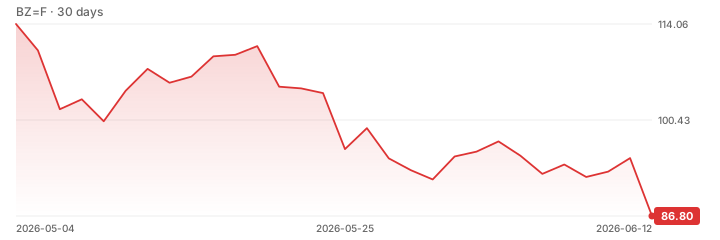
Brent crude futures climbed 1.17% to $91.80 a barrel on Thursday, marking a second consecutive day of gains as renewed military strikes between the United States and Iran disrupted flows through key shipping corridors.
The price move reflects growing market anxiety over potential supply interruptions in the Strait of Hormuz, a critical chokepoint for global oil trade.
With oil prices already elevated above $70 earlier in the week due to initial supply fears, the latest strikes have pushed benchmarks toward multi-month highs.
The escalation follows a second wave of US strikes on Iranian coastal defenses and missile sites early Thursday, intensifying the ongoing confrontation in the Persian Gulf.
This development reverses the brief calm seen earlier in the week when markets had priced in a potential de-escalation.
Despite President Donald Trump’s claims that negotiations with Tehran remain active, the physical reality of renewed hostilities has overshadowed diplomatic signals.
Investors are now weighing the risk of prolonged disruption against the possibility of a sudden ceasefire.
The volatility underscores the fragility of the current geopolitical equilibrium.
With oil prices already elevated above $70 earlier in the week due to initial supply fears, the latest strikes have pushed benchmarks toward multi-month highs.
Traders will closely monitor any further developments in US-Iran relations, including potential statements from the White House or Iranian leadership.
The next key catalyst could be a shift in military posture or a breakthrough in diplomatic talks.