Pakistan’s government has approved a new Brownfield Refining Policy, ending a six-year legislative stalemate that had stalled modernisation efforts at the country’s petroleum refineries.
The policy, cleared on Tuesday, introduces tax incentives and dedicated foreign-exchange accounts to facilitate the import of machinery, alongside measures to expand both offshore and onshore storage capabilities.
The move is designed to protect existing investments and enhance energy security by upgrading domestic processing capacity.
By streamlining the regulatory framework for brownfield expansions, Islamabad aims to reduce reliance on refined product imports and improve the operational efficiency of its aging refinery infrastructure.
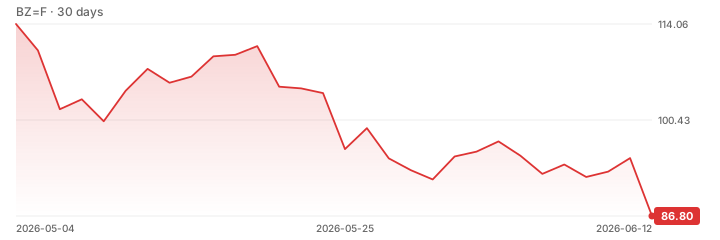
While the policy signals a renewed commitment to domestic energy self-sufficiency, its immediate impact on global crude markets is expected to be minimal.
Pakistan’s refining capacity represents a small fraction of global supply, and the modernisation process will take years to materialise in terms of throughput.