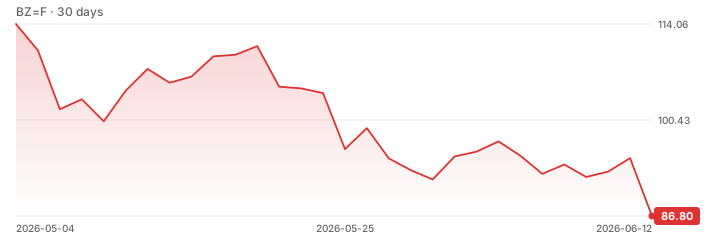
Brent crude has shed $16 per barrel over the past eight trading sessions, marking a sharp reversal in the energy market's trajectory.
The decline accelerates a trend that saw prices fall to their lowest level since the outbreak of the war in the Middle East earlier this week, as traders increasingly price in a de-escalation scenario.
This development follows a period of heightened volatility, where Brent had previously stabilized around $72 as uncertainty capped downside moves.
The primary driver is growing confidence in diplomatic progress, specifically reports that former U.S. President Donald Trump has signaled hesitancy to resume full-scale military action against Iran.
This shift in political posture has reduced the immediate risk of supply disruption, prompting a rapid repricing of the geopolitical premium embedded in crude valuations.
Market participants are now factoring in the potential return of Iranian oil supplies to the global market.
The prospect of additional barrels coming online has weighed heavily on sentiment, reversing a week of gains that had been supported by fears of prolonged conflict.
The sell-off reflects a broader reassessment of supply constraints, with traders moving away from a scarcity narrative toward one of potential oversupply if sanctions ease.
This development follows a period of heightened volatility, where Brent had previously stabilized around $72 as uncertainty capped downside moves.