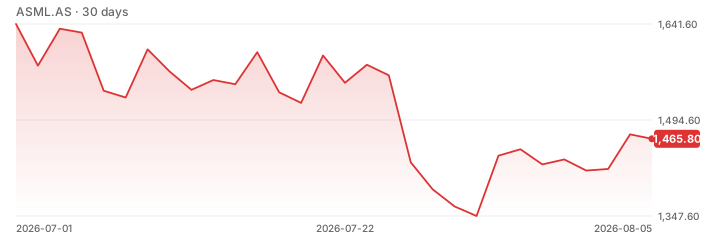
China has initiated mass production of immersion deep ultraviolet (DUV) lithography machines, a development that signals a significant escalation in its push for semiconductor self-sufficiency.
The move represents a tangible shift from research and development to industrial deployment, challenging the entrenched dominance of Western and Japanese equipment suppliers in the advanced chip manufacturing supply chain.
The immediate market implication centers on the viability of these domestic tools.
While the announcement of mass production is a strategic milestone, industry observers note that yield rates and long-term reliability remain unproven at scale.
Until Chinese foundries can demonstrate that these machines produce chips with competitive defect rates, the threat to incumbent suppliers like ASML remains largely theoretical rather than immediate.
This development unfolds against a backdrop of heightened geopolitical tension in the technology sector.