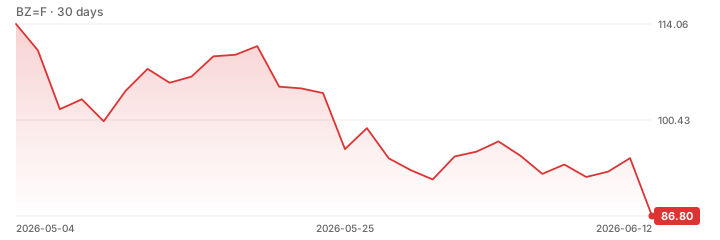
Germany’s energy security is facing a critical stress test as the country prepares for winter, with the ongoing Iran conflict continuing to exert upward pressure on oil and gas prices despite signs that the Strait of Hormuz blockade is weakening.
The geopolitical instability has entrenched higher energy costs, complicating efforts to stabilize supply chains ahead of the heating season.
The market reality for European energy buyers remains challenging.
While the immediate threat of a total shipping disruption in the Hormuz corridor appears to be receding, the broader conflict has established a new, higher price floor for energy commodities.
This premium is being passed through to end-users and industrial consumers, eroding the cost advantages gained from previous supply diversification efforts.
Europe’s strategy of seeking alternative suppliers to replace Russian flows is colliding with these geopolitical cost realities.