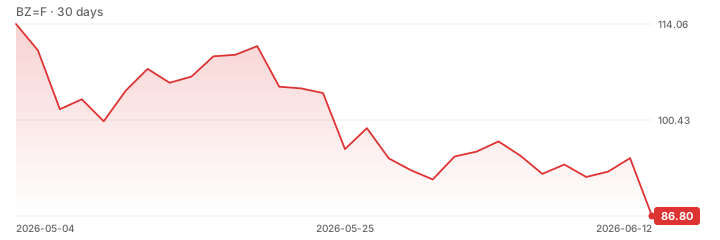
Iran and Oman are negotiating the introduction of transit fees for commercial vessels passing through the Strait of Hormuz, with proposed rates ranging from 3% to 7% of the declared cargo value.
The discussions represent a significant escalation in the potential monetization of the waterway, moving beyond earlier agreements to study administrative costs toward concrete financial demands on shipping operators.
The prospect of such fees introduces a direct cost layer to global energy trade, as roughly a fifth of the world's oil supply passes through the narrow chokepoint.
For traders and shipping companies, the implementation of these tolls would compress margins and potentially feed into higher freight rates or insurance premiums, depending on how the market absorbs the new expense.
This development follows recent reports that the two nations agreed to jointly study the costs associated with administering the Strait.
The shift from cost analysis to fee negotiation signals a hardening of Iran's position on leveraging its geographic advantage, adding a new variable to an already tense geopolitical environment.