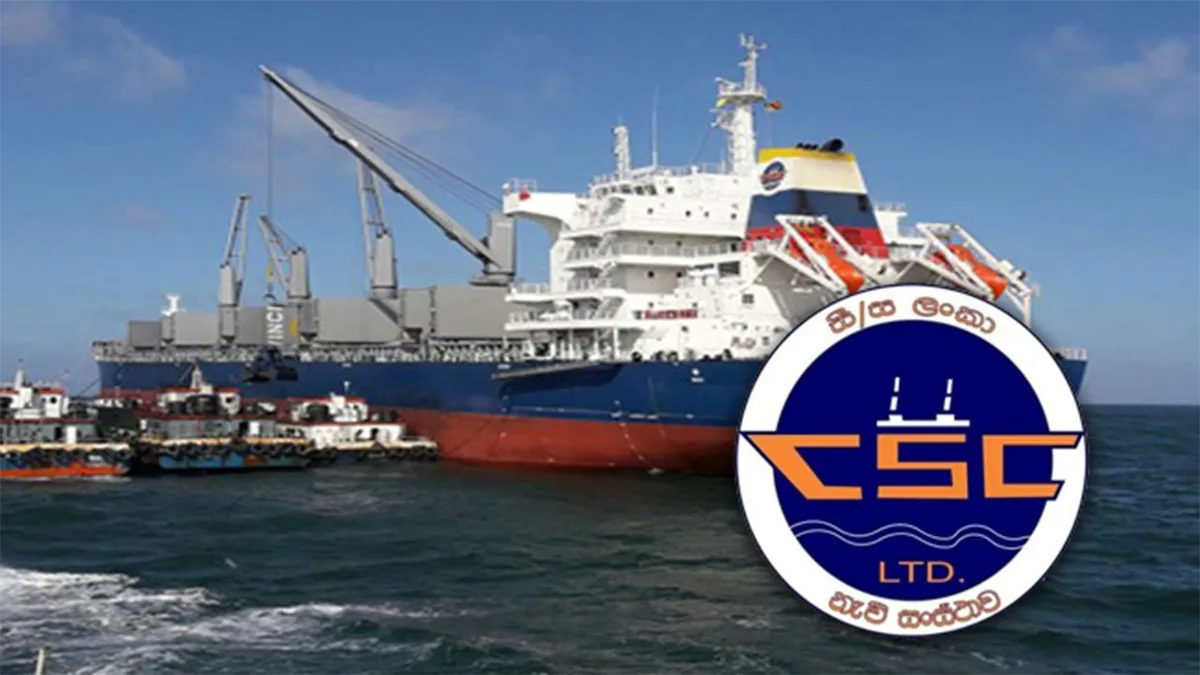
The Committee on Public Enterprises (COPE) has exposed significant financial and governance failures at the Ceylon Shipping Corporation Limited (CSCL), revealing that the state-owned entity invested Rs. 630 million across six subsidiary and associated companies but recovered only approximately Rs. 400,000 in annual dividends.
The stark disparity between capital deployed and returns generated underscores deep structural inefficiencies within Sri Lanka’s maritime state apparatus, drawing scrutiny to executive decision-making and asset management practices.
The findings from COPE, a parliamentary oversight body, indicate that the corporation’s investment strategy has failed to generate meaningful value for the state.
With returns amounting to less than 0.1% of the initial outlay, the report suggests a lack of rigorous due diligence and post-investment monitoring.
This revelation comes at a time when global shipping markets are navigating heightened volatility due to geopolitical tensions and route disruptions, making operational efficiency and financial prudence critical for state-backed carriers.
While the immediate impact on global freight rates or energy flows is negligible given CSCL’s limited market share, the report serves as a warning to investors and policymakers about the risks associated with poorly governed state-owned enterprises in the shipping sector.