Hungary is approaching a critical juncture on fuel pricing as neighboring countries move in opposite directions to lower costs for consumers.
While Romania has implemented statutory margin caps and Poland has seen market-driven reductions, the Hungarian government is constrained by limited refining capacity, leaving it with few immediate levers to ease prices at the pump.
The divergence in Central European fuel markets highlights the structural challenges facing Budapest.
Unlike its neighbors, Hungary cannot easily rely on market competition or simple regulatory caps to drive down costs due to bottlenecks in domestic refining infrastructure.
This constraint forces policymakers to consider more complex interventions or accept higher prices relative to the region.
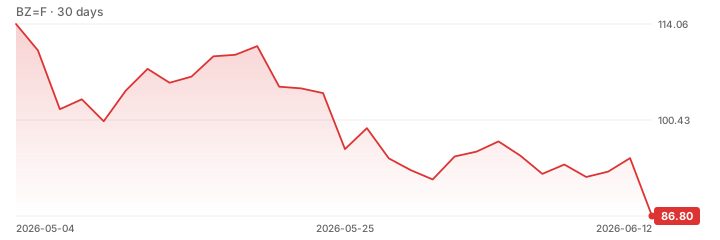
Brent crude prices remain a key external factor, with global supply risks continuing to influence regional fuel costs.