Apple has raised prices on its Mac and iPad product lines by as much as 25%, marking a significant escalation in the cost pressures facing the consumer electronics sector.
The Cupertino-based company attributed the steep increases to a severe global shortage of memory chips, a supply constraint it described as an "unprecedented challenge" driven by surging demand from the artificial intelligence industry.
The price hikes represent a direct pass-through of component costs to end consumers, a move that typically signals margin compression or volume risk for hardware manufacturers.
Apple shares fell in trading Thursday following the confirmation of the price adjustments, as investors weighed the potential impact on demand elasticity and near-term profitability.
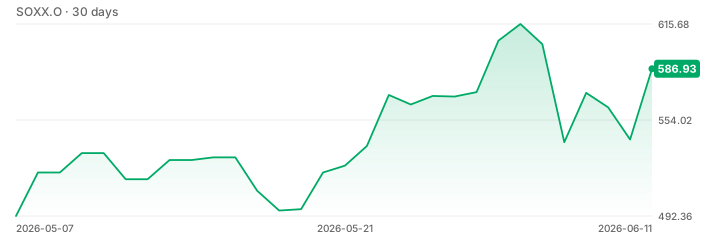
The shortage underscores the intensifying competition for semiconductor capacity between the AI infrastructure build-out and traditional consumer electronics.
As data-center demand for high-bandwidth memory and advanced logic chips accelerates, legacy consumer segments are facing tighter supply and higher input costs.
This dynamic highlights a structural shift in the semiconductor supply chain, where AI workloads are increasingly prioritized over consumer device production.
Market participants will monitor whether the price increases lead to a measurable slowdown in unit sales for Mac and iPad products.