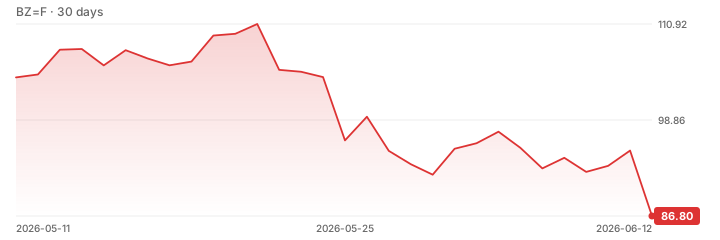
Brent crude futures fell below $76.50 a barrel on Wednesday, marking the lowest level in four months as traders continued to digest signs of stabilizing supply routes in the Middle East.
The decline reflects a broadening loss of confidence in near-term supply disruption risks, with the benchmark contract sliding as market participants reassessed the geopolitical premium embedded in energy prices.
The downward pressure was reinforced by reports that the number of vessels transiting the Strait of Hormuz reached its highest level since the initial escalation of tensions.
This surge in shipping activity suggests that commercial flows are normalizing, reducing the immediate threat of bottlenecks that had previously supported higher oil valuations.
The Strait remains a critical chokepoint for global energy supplies, and increased traffic volume is being interpreted by traders as a tangible de-escalation of physical supply risks.
This move extends the retreat that began earlier in the week, following the conclusion of the first round of talks between the United States and Iran in Switzerland.