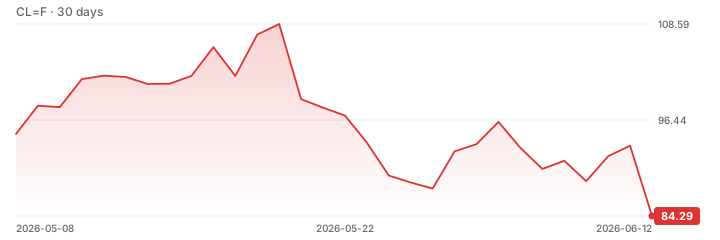
China’s crude oil imports are unlikely to return to pre-conflict levels, as the country’s rapid transition to electric vehicles fundamentally reshapes its fuel demand profile.
Analysts note that the ongoing war in Iran has accelerated structural trends that were already suppressing consumption of gasoline and diesel, creating a ceiling on import volumes regardless of geopolitical supply disruptions.
The divergence between geopolitical risk premiums and fundamental demand is becoming increasingly apparent in energy markets.
While Middle East tensions typically drive oil prices higher through supply fears, China’s domestic policy push toward electrification is dampening the downstream impact.
This structural shift suggests that even if supply chains normalize, the volume of crude required to meet Chinese demand will remain structurally lower than in previous cycles.
This development adds nuance to recent reports that China is set to increase crude imports from the United States, a move framed by US Energy Secretary Chris Wright as a natural alignment of energy trade partners.