U.S. Treasury yields held steady this week despite a barrage of hotter-than-expected macroeconomic data, signaling that investors are largely dismissing fears of a persistent inflation resurgence.
The resilience in the bond market came even as U.S. gross domestic product growth exceeded forecasts and the Federal Reserve’s preferred inflation gauge, the Personal Consumption Expenditures (PCE) price index, posted its highest reading since October 2023.
While the PCE print was technically the strongest in nearly three years, the lack of a corresponding spike in long-end yields indicates that the market is pricing in a return to the Fed’s 2% target later in the year.
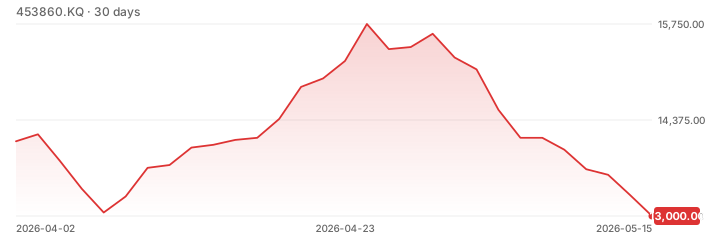
Rather than fleeing to cash or shortening duration, market participants rotated capital into specific exchange-traded funds, notably those tracking crude oil and technology equities.
This flow pattern suggests traders are interpreting the inflation spike as supply-driven and temporary, linked to energy markets, rather than a broad-based demand shock that would force the Federal Reserve to maintain restrictive policy for longer.
The divergence between the macro data and market reaction highlights a growing skepticism among institutional investors regarding the durability of current price pressures.
While the PCE print was technically the strongest in nearly three years, the lack of a corresponding spike in long-end yields indicates that the market is pricing in a return to the Fed’s 2% target later in the year.