Steady supplies of oil and petroleum products through the Strait of Hormuz could resume by early August, provided there is no further escalation of the conflict in the Middle East.
Alexey Belogoryev, research director at the Russian Institute of Strategic Studies, outlined the timeline, noting that while market participants have partially adapted to geopolitical risks, uncertainty persists due to the ongoing US-Iran negotiations.
Analysts suggest that if the newly finalized US-Iran diplomatic agreement is implemented without major setbacks, tanker traffic could reach nearly 50% of prewar levels within a month.
The assessment comes as tanker traffic through the strategic chokepoint has surged to its highest level since the March closure.
Recent Handelsavisen reporting indicates that oil exports have begun to recover following a period of severe disruption, though the return to normal flow levels is expected to be a gradual process stretching over months rather than days.
Analysts suggest that if the newly finalized US-Iran diplomatic agreement is implemented without major setbacks, tanker traffic could reach nearly 50% of prewar levels within a month.
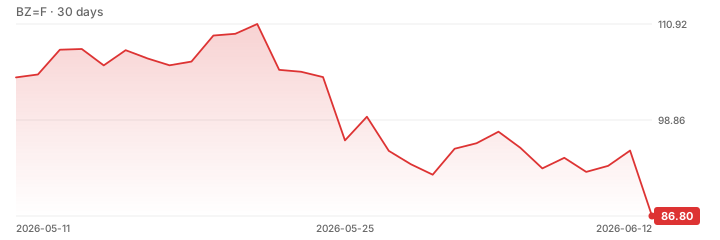
The Strait of Hormuz remains a critical artery for global energy flows, and any deviation from the projected normalization path carries significant implications for Brent crude and freight rates.