The International Energy Agency (IEA) has signaled that the ongoing military conflict between the United States and Iran is acting as a catalyst for accelerated global electrification.
According to reports from Swiss and Swedish media outlets, the agency argues that the crisis is compelling governments to overhaul their energy security frameworks, shifting focus toward domestic power generation and grid resilience to insulate economies from future supply shocks.
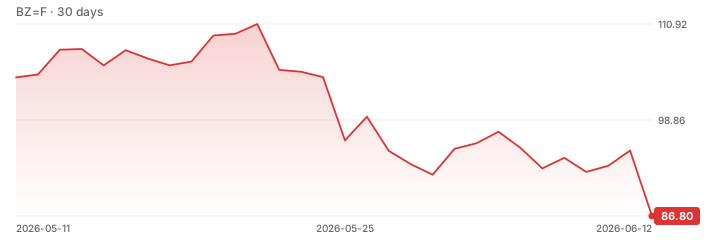
The agency has warned that the war is inflicting severe damage on crude consumption, driven by disrupted trade routes and dampened economic activity in key regions.
This strategic pivot comes as the IEA simultaneously downgrades its global oil demand outlook.
The agency has warned that the war is inflicting severe damage on crude consumption, driven by disrupted trade routes and dampened economic activity in key regions.
The dual narrative highlights a structural shift: while immediate hydrocarbon demand softens due to conflict-induced economic drag, the long-term imperative to secure energy supplies through electrification is intensifying.
The IEA’s assessment suggests that the geopolitical risk premium embedded in oil markets is no longer just a short-term trading variable but a driver of fundamental policy change.