Iran and Oman have conducted their first meeting on the management of the Strait of Hormuz since Tehran and Washington signed a preliminary agreement to end the Middle East conflict.
The talks, held in Muscat, mark a tangible step toward operationalizing the security arrangements outlined in the ceasefire deal.
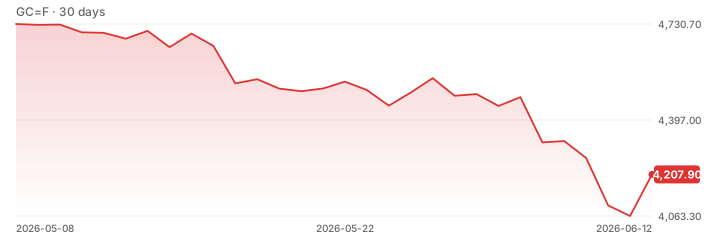
The development comes as oil prices have retreated from recent highs, with markets digesting the prospect of stabilized supply flows through the critical chokepoint.
While the preliminary deal included provisions for the immediate reopening of the Strait and a temporary lifting of oil sanctions, the Muscat meeting signals a shift from diplomatic declarations to practical coordination on maritime security.
Iran’s chief negotiator, Mohammad Bagher Ghalibaf, recently asserted that Tehran would administer the Strait, a stance that has drawn scrutiny from international shipping interests.
The involvement of Oman, a key regional stakeholder with significant economic exposure to Hormuz transit, suggests an effort to balance Iranian sovereignty claims with broader regional stability concerns.