Iran is reportedly planning to charge vessels billions of dollars annually in transit fees to reopen the Strait of Hormuz, a move that could fundamentally alter the economics of global energy trade.
The proposal, which would effectively turn the critical waterway into a toll road, emerges as Tehran negotiates a framework agreement with the United States to end hostilities.
The potential imposition of such fees represents a significant shift in the geopolitical landscape of the Persian Gulf.
While the reopening of the strait is a prerequisite for stabilizing global oil supplies, the financial burden placed on shipping companies and energy traders could sustain elevated risk premiums in freight and crude markets.
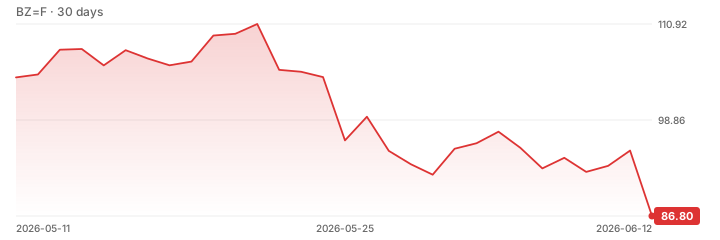
This development threatens to undermine the recent decline in Brent crude prices, which had fallen below pre-war levels as markets priced in a swift return to normalcy.
According to the Australian Financial Review, the fee structure is being negotiated as part of the broader peace framework mediated through Pakistan.