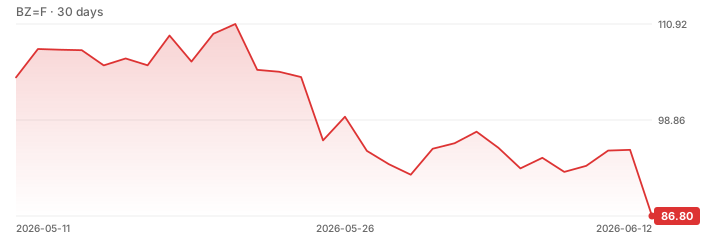
At least three Iranian crude oil tankers carrying nearly five million barrels have successfully navigated past the U.S. Navy blockade in the Strait of Hormuz, marking the first such outbound shipment in two months.
The movement signals a tangible shift in the naval standoff, as shipowners and insurers react with cautious optimism to the easing of direct maritime pressure.
8 billion on Tehran, according to Pentagon assessments, the physical release of these tankers suggests a de-escalation in kinetic naval operations.
The development arrives as the U.S. and Iran navigate a fragile diplomatic framework.
While the blockade has imposed a cumulative financial burden of $4.8 billion on Tehran, according to Pentagon assessments, the physical release of these tankers suggests a de-escalation in kinetic naval operations.
This contrasts with recent claims from Iranian state media alleging that a U.S. warship was struck by missiles in the strait—claims that U.S. Central Command has firmly denied, stating no U.S. Navy ships have been hit.
For energy markets, the exit of these tankers removes a layer of immediate supply disruption risk from the Hormuz chokepoint.
However, the broader geopolitical backdrop remains volatile.