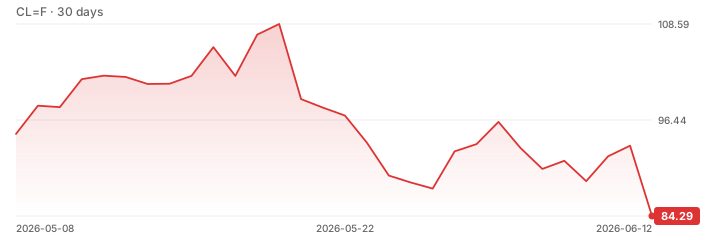
The probability of the Riksbank raising interest rates this autumn has receded as crude oil prices tumbled following renewed diplomatic engagement between the United States and Iran.
Economists surveyed by Svenska Dagbladet indicate that the sharp decline in energy costs removes a key driver of imported inflation, making a tightening cycle less likely than previously feared.
With oil prices retreating from levels near $100 a barrel, the pass-through effect on consumer prices is expected to moderate, giving the central bank more room to maintain its current stance.
Mattias Persson, chief economist at Swedbank, noted that the current price environment makes it difficult to envision strong inflationary pressure building in the Swedish economy.
With oil prices retreating from levels near $100 a barrel, the pass-through effect on consumer prices is expected to moderate, giving the central bank more room to maintain its current stance.
The repricing of geopolitical risk has been swift.
While earlier tensions in the Middle East had kept a risk premium embedded in energy markets, the prospect of a ceasefire has rapidly unwound those concerns.