US Secretary of State Marco Rubio is undertaking a critical diplomatic tour of the Gulf, visiting the United Arab Emirates, Kuwait, and Bahrain to secure regional backing for Washington’s proposed Iran peace deal.
The initiative faces significant resistance from Gulf Arab leaders, who remain wary of the reset and its implications for regional security architecture.
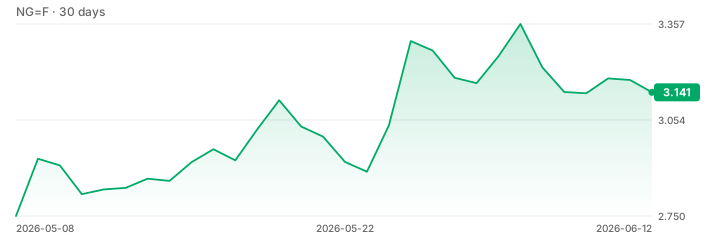
While no immediate supply disruption has been reported, the potential for geopolitical volatility keeps a risk premium on crude oil and natural gas prices.
Rubio’s meetings, scheduled to run through Thursday, aim to align Gulf partners with the US strategy as nuclear negotiations with Tehran continue.
The diplomatic friction introduces renewed uncertainty into energy markets, where investors are closely monitoring the Strait of Hormuz and regional shipping routes.
While no immediate supply disruption has been reported, the potential for geopolitical volatility keeps a risk premium on crude oil and natural gas prices.
Markets are pricing in the possibility that stalled diplomacy could reignite tensions, affecting global energy supply chains.