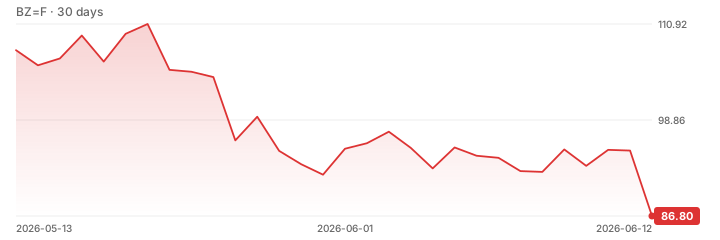
The United States and Iran have reached a formal agreement to end hostilities, a diplomatic breakthrough that immediately shifts the geopolitical landscape in the Middle East.
The deal, which follows weeks of intense negotiations and a proposal from Tehran aimed at satisfying U.S. security demands, marks a decisive de-escalation after months of heightened tensions that disrupted global shipping routes.
The Strait of Hormuz, through which roughly 20% of global oil consumption passes, has faced recurring disruption risks that kept risk premiums elevated.
For energy and freight markets, the agreement carries immediate pricing implications.
The Strait of Hormuz, through which roughly 20% of global oil consumption passes, has faced recurring disruption risks that kept risk premiums elevated.
Markets are now repricing the probability of a sustained return to normal transit flows, with Brent crude and regional shipping indices likely to absorb the shift as concrete implementation steps emerge.
The agreement does not yet guarantee immediate operational normalization.