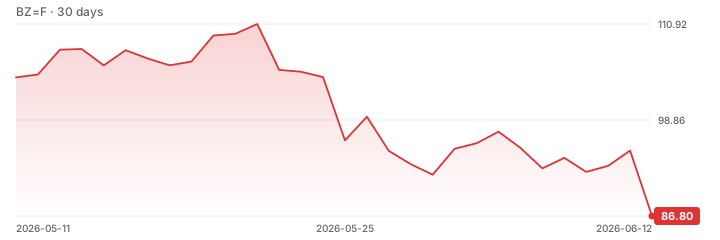
US inflation has accelerated to its highest level in more than three years, with the Personal Consumption Expenditures (PCE) price index rising 4.1% year-on-year in May. The surge follows a similar spike in April, when inflation climbed to 3.8%, marking the highest reading in nearly three years. The acceleration is largely attributed to rising energy costs, which have been exacerbated by ongoing geopolitical tensions.
The persistent inflationary pressure poses a significant challenge for the Federal Reserve, which has been navigating a delicate balance between supporting economic growth and controlling price stability.
The recent data suggests that the central bank may need to maintain a cautious stance on interest rates, potentially delaying any anticipated cuts.
Markets are closely watching for signs of whether this inflationary spike is a temporary blip or a more entrenched trend.
Some economists argue that the worst may be over, pointing to a recent decline in gasoline prices as a potential mitigating factor.
However, the broader impact of energy costs on consumer spending and business operations remains a key concern.
The Federal Reserve's next move will be critical in determining how markets respond to this renewed inflationary pressure.