Stocks of crude oil in the U.S. Strategic Petroleum Reserve (SPR) have fallen to their lowest level since May 1983, according to data from the Department of Energy.
The reserve now holds 325.7 million barrels, following a drawdown of 5.5 million barrels in the latest reporting period.
This marks a significant milestone in the long-term depletion of the strategic buffer, which was originally built up in the 1970s and 1980s in response to oil embargoes.
The continued erosion of SPR stocks highlights the structural shift in U.S. energy policy, where the reserve is increasingly used to manage short-term price volatility rather than serve as a deep strategic cushion.
With levels at historic lows, the capacity for the government to inject supply into the market during acute disruptions is severely limited.
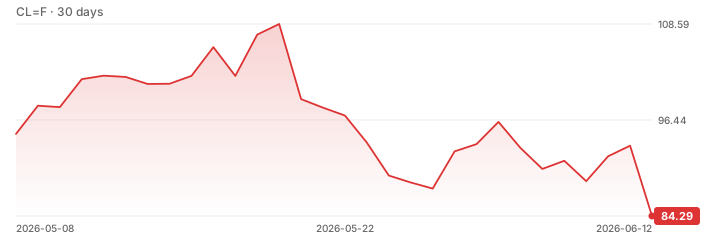
This structural reality adds a layer of risk premium to crude valuations, even as spot prices fluctuate based on near-term geopolitical developments.