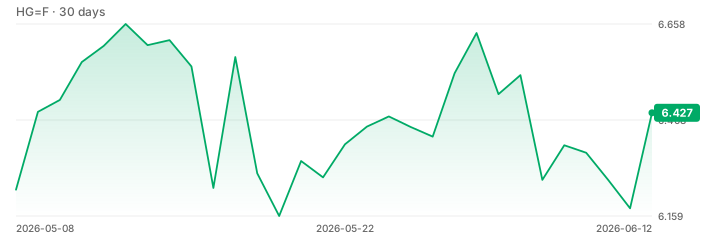
Copper, which has traded at record levels this year on the back of the energy transition, is encountering fresh structural headwinds that could dampen near-term demand growth.
Analysts point to two emerging constraints: a growing global backlash against the rapid rollout of data centres required for artificial intelligence, and a strategic pivot by automakers toward cheaper aluminium wiring to reduce production costs.
51% to $13,580 a metric ton on Tuesday, pressured by growing concerns over potential Federal Reserve interest rate hikes.
These developments challenge the narrative of unbounded copper demand driven by electrification and digital infrastructure.
While the metal remains a critical component for power grids and renewable energy systems, the substitution effect in the automotive sector and regulatory friction in the tech sector introduce uncertainty into the long-term demand curve.
The market has already begun to price in broader macroeconomic risks.
Benchmark three-month copper on the London Metal Exchange fell 0.51% to $13,580 a metric ton on Tuesday, pressured by growing concerns over potential Federal Reserve interest rate hikes.