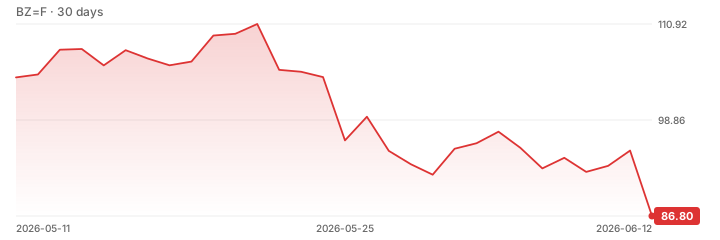
Crude oil futures jumped sharply on Tuesday following reports of missile attacks targeting tankers in the Strait of Hormuz.
The incidents mark a significant escalation in maritime violence, directly challenging the security of one of the world’s most vital energy transit routes.
Just days ago, Citi analysts forecast that Brent crude could fall to $60 if the risk premium unwinds, a scenario that now seems increasingly unlikely given the fresh violence.
The attacks appear to violate a memorandum of understanding signed less than three weeks ago, under which Iran agreed to halt hostilities in the strait.
This breach of the truce has forced traders to rapidly reassess the risk premium embedded in energy prices, shifting sentiment from cautious optimism to acute supply anxiety.
Handelsavisen’s archive shows that crude prices have been volatile in recent weeks, swinging between hopes of de-escalation and fears of renewed conflict.
Just days ago, Citi analysts forecast that Brent crude could fall to $60 if the risk premium unwinds, a scenario that now seems increasingly unlikely given the fresh violence. The market had previously seen prices edge higher when Iran rejected direct talks in Doha, but the current escalation represents a more direct threat to physical supply.
The Strait of Hormuz handles roughly a fifth of global oil consumption, and any sustained disruption would have immediate consequences for global energy markets.