The German DAX index opened sharply lower on Tuesday, breaking through the psychologically significant 25,000-point support level as markets reacted to a sudden escalation in geopolitical tensions.
The benchmark index slid 1.2% to 24,851 points, with selling pressure intensifying as investors reassessed the risk landscape following reports of renewed military exchanges between the United States and Iran.
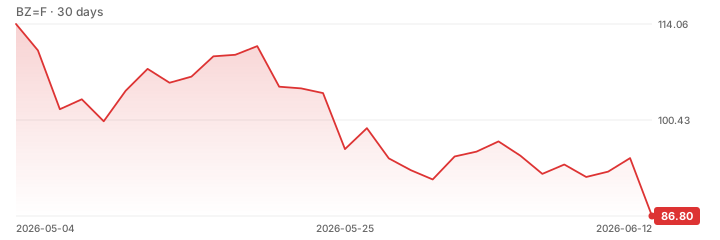
This development marks a significant deterioration from the relative stability seen in recent weeks, where Brent crude had stabilized around $72 amid lingering but contained geopolitical uncertainty.
The downturn in European equities was driven primarily by a sharp rebound in oil prices, which surged as attention turned to the Strait of Hormuz.
The fragile peace agreement between Washington and Tehran appears to have collapsed under the weight of the latest strikes, raising immediate concerns about potential disruptions to global energy supply routes.
This development marks a significant deterioration from the relative stability seen in recent weeks, where Brent crude had stabilized around $72 amid lingering but contained geopolitical uncertainty.
Market participants are now pricing in a renewed risk premium for energy commodities, echoing earlier fears when Iran threatened tankers deviating from established Hormuz routes.
The spike in oil prices is not only weighing on consumer sentiment and inflation expectations but also pressuring equity valuations across energy-sensitive sectors.
The DAX’s failure to hold the 25,000 mark signals that investor confidence is fragile, with the index testing critical support levels as selling pressure from Asian markets carried over into European trading hours.
The escalation comes at a time when global markets were already sensitive to geopolitical shocks, having recently absorbed news of expiring fuel price caps in Europe and subsidy withdrawals in Poland.