The European Central Bank faces a conflicting set of signals as it weighs its next policy move, with cooling domestic inflation clashing against renewed geopolitical instability.
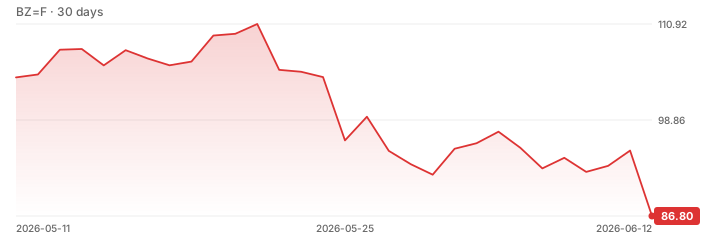
While price pressures across the eurozone are easing, escalating tensions involving Iran are introducing new uncertainty into the outlook for energy costs and broader market stability.
Preliminary data from June indicates that inflation in the eurozone’s largest economies—France, Italy, and Spain—is falling more rapidly than previously anticipated.
This sustained downward trend in price growth has led several ECB officials to signal that the fight against inflation is effectively over, marking a decisive shift in the central bank’s communication stance.
The improving domestic data had bolstered market expectations that the ECB would hold rates steady or potentially begin easing.
However, the recent escalation in the Iran conflict is complicating this narrative.