A reported anomaly on a natural gas pipeline in Guyana has triggered immediate uncertainty among energy market participants, with both government officials and ExxonMobil refusing to provide specific operational details.
The lack of transparency regarding the severity and location of the issue has prevented a clear assessment of potential supply impacts, leaving the market to price in the risk of disruption in one of the world's fastest-growing oil and gas regions.
The refusal to disclose further information suggests the situation may be in early stages or involves sensitive infrastructure data.
For traders monitoring global natural gas flows, the ambiguity is a key risk factor.
Guyana's energy sector has been a primary driver of recent supply growth, and any operational hiccup in its gas handling infrastructure can reverberate through regional power markets and export logistics.
The incident adds to a broader narrative of scrutiny surrounding the management and transparency of Guyana's resource wealth, as noted in recent coverage of political pressures on the sector.
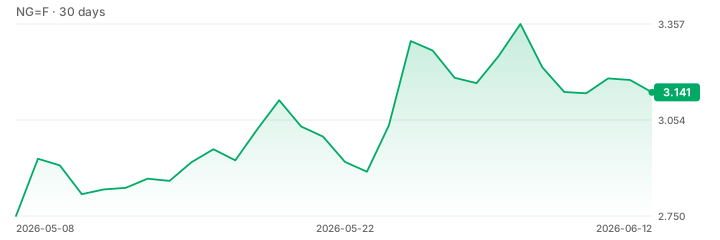
While no immediate price shock has been observed in global natural gas benchmarks, the potential for localized supply constraints remains a concern.