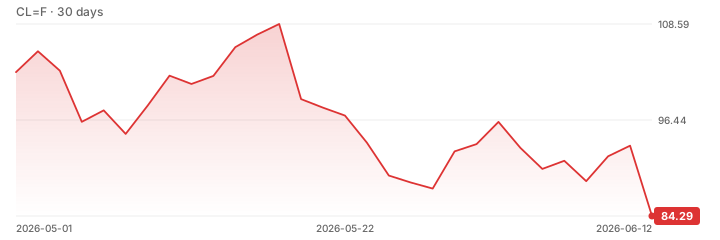
The International Energy Agency (IEA) projects a return to global crude oil surplus conditions by 2027, provided that shipping routes through the Strait of Hormuz normalize.
However, the agency highlights a persistent structural mismatch in the downstream market, where supplies of refined products such as gasoline and diesel remain tight despite the anticipated abundance of raw crude.
This divergence stems from sluggish refining activity across the Middle East and ongoing disruptions in Russia, where attacks on infrastructure have hampered output.
While Asia’s crude oil imports are recovering toward pre-conflict levels, the recovery is not translating into balanced downstream supply.
The resulting constraint on refined fuel flows is keeping prices elevated for end-user products, even as the crude market prepares for a potential oversupply.
The IEA’s assessment underscores the complexity of the current energy landscape.