Iran has issued a stern warning to international shipping operators, demanding that all oil tankers transiting the Strait of Hormuz adhere to Tehran-approved routes or face a "forceful response." The directive, attributed to Iran's joint military command, marks a significant escalation in the country's efforts to assert control over the narrow waterway, which handles roughly a fifth of the world's oil supply.
The threat introduces fresh uncertainty into global energy markets, where traders are already sensitive to geopolitical friction in the Middle East.
While no immediate disruption to flows has been reported, the warning raises the risk premium on shipping insurance and freight rates for vessels navigating the corridor.
While no immediate disruption to flows has been reported, the warning raises the risk premium on shipping insurance and freight rates for vessels navigating the corridor.
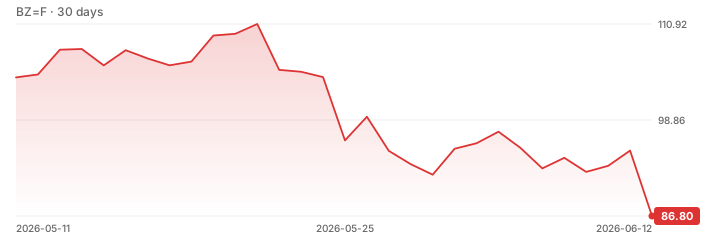
Brent crude prices are likely to remain volatile as investors assess the potential for actual enforcement of the new routing rules.
This development follows closely on the heels of a major logistical move by Saudi Arabia, which recently dispatched its largest oil shipment through the Strait in four months.
The juxtaposition of Riyadh's continued reliance on the route and Tehran's hardline stance underscores the delicate balance of power and commerce in the region.