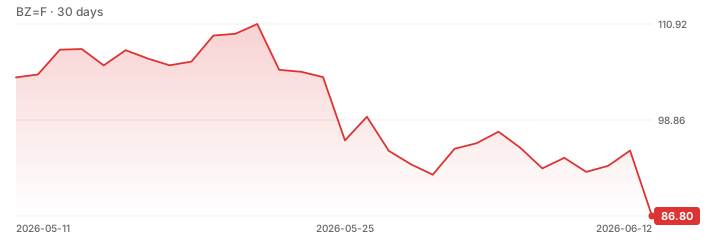
The ongoing conflict in Iran has laid bare the fragility of Japan's energy supply chains, yet it has not fundamentally altered the country's heavy reliance on imported oil.
Reports indicate that despite the heightened geopolitical tensions and the visible scars left across Asian markets, Tokyo's structural dependence on Middle Eastern crude remains unchanged.
This persistent vulnerability underscores the broader market reality: the Iran war is shaking up oil flows without offering an immediate resolution or alternative supply route for major importers.
The lack of a swift diplomatic or military resolution means that shipping risks in the Strait of Hormuz continue to weigh on energy markets, keeping a premium on Brent crude and complicating logistics for Asian refiners.
For traders and investors, the key takeaway is that the geopolitical risk premium is not a temporary anomaly but a structural feature of the current regime.
As long as Japan and other Asian economies cannot decouple from Middle Eastern supply, any escalation in the region will continue to trigger repricing in energy and cross-asset markets.