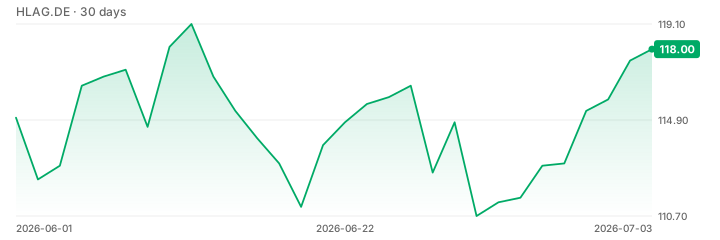
Maersk and Hapag-Lloyd have begun rerouting vessels through the Suez Canal, marking a decisive return to the traditional Asia-Europe trade corridor after months of avoiding the Red Sea due to Houthi attacks.
The move by the two industry giants signals that geopolitical risk premiums are receding, allowing shippers to reclaim the efficiency of the shorter transit path around Africa's Cape of Good Hope.
5% in midday trading after the company confirmed it would route vessels through the Suez Canal instead of taking the longer path around the Cape of Good Hope.
The repricing of shipping risk is already evident in equity markets.
Maersk shares fell sharply on Monday, dropping 8.5% in midday trading after the company confirmed it would route vessels through the Suez Canal instead of taking the longer path around the Cape of Good Hope.
The Danish shipping giant’s decline reflects investor concerns that the end of the detour will compress freight rates and reduce the windfall revenues generated during the disruption period.
This development coincides with broader normalization in global chokepoints.