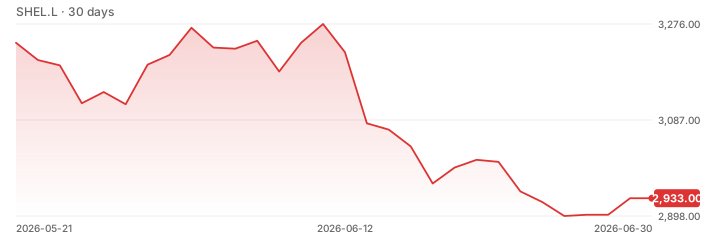
Shell’s second-quarter results highlight a stark divergence between its physical production and its trading arm, as Middle East conflict disrupts gas flows while boosting commodity spreads.
The British energy major reported that its integrated gas production is expected to land between 610,000 and 650,000 barrels of oil equivalent per day, a figure that reflects significant operational headwinds.
Despite the volume contraction, the company’s trading business delivered continued strength, capitalizing on the volatility and supply constraints inherent in the current geopolitical climate.
The market reaction underscores the dual nature of Shell’s exposure to the region.
While the drop in gas volumes is a direct consequence of the ongoing conflict, the trading division’s performance suggests that Shell is effectively monetizing the disruption.
This dynamic is critical for investors assessing the company’s resilience amid broader energy market instability.