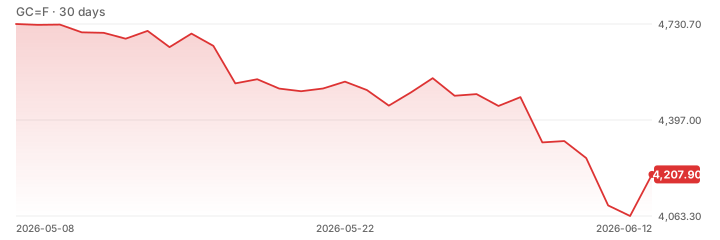
Geopolitical tensions in the Strait of Hormuz are intensifying, creating immediate headwinds for emerging-market currencies and downstream manufacturing sectors dependent on global energy flows.
The Indonesian rupiah has weakened against the dollar as risk aversion spreads, while domestic plastics producers are raising alarms over rising input costs and logistical uncertainty.
The Strait of Hormuz remains a critical artery for global oil and petrochemical shipments.
Any disruption or escalation in the corridor directly impacts freight rates and the cost of raw materials for industries ranging from packaging to automotive components.
For Indonesia, a net importer of refined petroleum products and petrochemical feedstocks, a spike in global energy prices translates directly into higher production costs and margin pressure for downstream manufacturers.
Market participants are closely monitoring the situation for signs of further escalation.