The Strait of Hormuz has returned to the center of geopolitical risk as the United States and Iran engage in direct military exchanges, driven by conflicting interpretations of a recent memorandum of understanding.
Iran is seeking to shut down a U.S. Navy-protected shipping lane through Oman’s waters, a route that has allowed oil and gas tankers to exit the Persian Gulf without seeking Tehran’s permission.
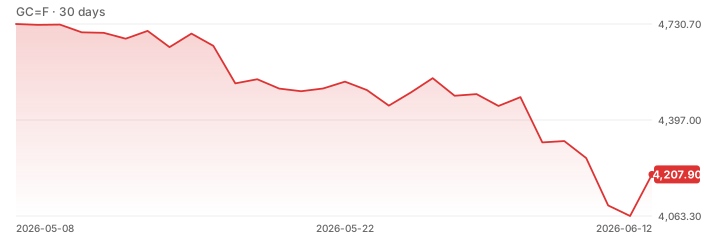
This development marks a sharp reversal from the de-escalation seen in late June, when tanker traffic normalized and crude prices plunged as the supply disruption risk premium evaporated.
The renewed hostilities raise immediate concerns for global energy flows.
The Strait of Hormuz remains the world’s most critical oil chokepoint, handling roughly a fifth of global oil consumption.
Any sustained disruption to the U.S.-protected lane or broader transit through the strait could quickly reprice the risk premium that traders had largely discarded over the past two weeks.
The International Maritime Organization’s recent adoption of a Singapore-led resolution to protect vital shipping lanes underscores the international community’s anxiety over the corridor’s stability.
Markets are likely to reassess the fragility of the recent peace.