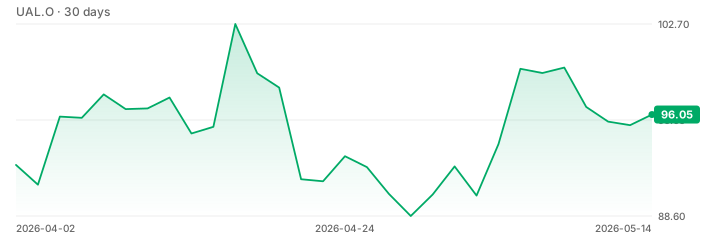
United Airlines (UAL) is expected to report its second-quarter 2026 earnings around July 15, based on calendar estimates derived from historical reporting patterns.
The date is modelled rather than confirmed by the issuer, but the window aligns with the carrier’s typical mid-July reporting schedule.
As one of the largest U.S. legacy carriers, United’s results serve as a key barometer for the broader aviation sector’s performance during the peak summer travel season.
Attention will center on whether robust leisure demand translated into higher revenue per available seat mile (RASM) and improved load factors.
The second quarter typically marks the beginning of the high-yield summer travel period, making it a critical test of the airline’s pricing power and network efficiency.
Investors will scrutinize whether United was able to capture premium fares on domestic and international routes, particularly in transatlantic and transpacific markets where capacity growth has been moderate.
Cost discipline remains a central theme for United and its peers.
Fuel costs, labor expenses, and maintenance outlays continue to pressure margins, even as revenue trends upward.