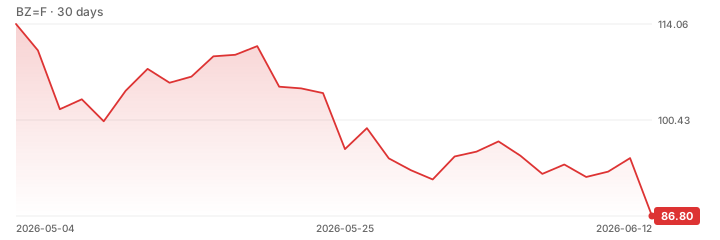
The United States and Iran have engaged in heavy missile and drone exchanges, with Tehran declaring the Strait of Hormuz closed once again.
The conflict has widened beyond the immediate corridor, with attacks reported in Qatar and the United Arab Emirates, marking a significant deterioration in regional security.
This development follows a period of stalled diplomatic talks in Doha, where negotiations over Strait access and shipping normalization had already broken down.
The closure of the Strait poses an immediate threat to global energy flows, as roughly a fifth of the world's oil supply passes through the narrow waterway.
Markets are likely to react sharply to the renewed disruption risk, with Brent crude and shipping equities facing upward pressure.
The escalation comes just days after a commercial tanker was struck in the Strait, signaling that hostilities are directly impacting commercial traffic.
The broader implications for trade routes are already being felt across Asia.
Indonesian officials have recently cited surging shipping costs to China as a direct result of the Hormuz crisis, highlighting the transmission of geopolitical risk into global supply chains.