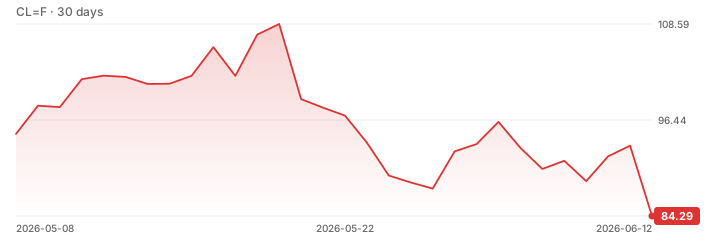
The United States launched military strikes against Iran on Wednesday, responding to Tehran's attacks on three vessels in the Strait of Hormuz.
In a coordinated escalation, Washington also revoked the Islamic Republic's ability to openly sell crude oil, effectively tightening sanctions on Iranian energy exports.
The strikes occurred during the dayslong funeral for Iran's Supreme Leader Ayatollah Ali Khamenei, who was killed on February 28 in the opening moments of the conflict.
This marks a significant intensification of hostilities, following Iran's earlier launch of missiles and drones against US military installations in Kuwait and Bahrain earlier in the week.
The dual use of military force and financial sanctions is designed to degrade Iran's capacity to project power while cutting off revenue streams from its oil sector.
By targeting shipping lanes and then striking back, the US aims to reassert control over the Strait of Hormuz, a critical chokepoint for global energy supplies.
The revocation of the oil export license adds a new layer of economic pressure, potentially disrupting supply flows and complicating logistics for traders who have been navigating the region's heightened risks.