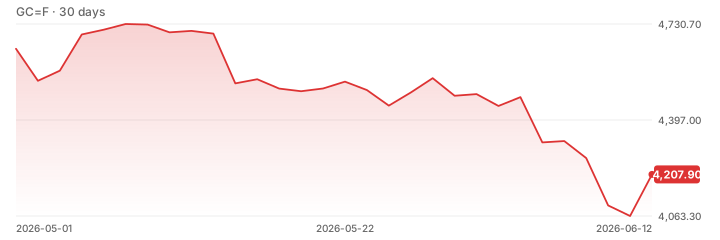
China’s foreign exchange reserves increased slightly in July, supported by a weaker US dollar and ongoing central bank purchases of gold.
The People’s Bank of China (PBOC) maintained its gold accumulation strategy for the 21st consecutive month, reinforcing Beijing’s long-term shift toward diversifying its reserve assets away from US dollar-denominated securities.
The country’s trade surplus expanded to $112 billion in July, driven by strong exports of semiconductors and AI hardware, which provided additional support for reserve levels.
The modest rise in reserves reflects valuation effects from the dollar’s decline rather than a surge in new inflows.
According to Infomoney, the PBOC’s persistent gold buying underscores a strategic effort to hedge against geopolitical risks and potential sanctions exposure, while also stabilizing the yuan amid shifting global trade dynamics.
This development aligns with broader trends in China’s external position.
The country’s trade surplus expanded to $112 billion in July, driven by strong exports of semiconductors and AI hardware, which provided additional support for reserve levels.