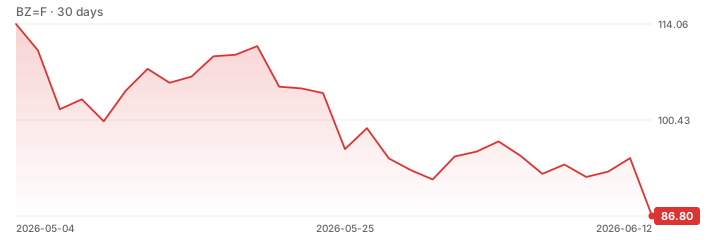
The Bank of Russia has identified rising global energy prices as the primary driver behind the ruble’s appreciation between March and May 2026, according to a summary of its latest key rate discussion.
The central bank noted that the currency has since corrected from those peaks, returning to levels last seen in late April 2026.
However, the central bank emphasized that this external support has not translated into broader economic stability.
This volatility underscores the continued sensitivity of the Russian currency to external commodity shocks, even as domestic monetary policy tightens.
The influx of export revenues from higher oil and gas prices provided a temporary buffer for the ruble, offsetting some of the downward pressure from capital outflows and sanctions-related friction.
However, the central bank emphasized that this external support has not translated into broader economic stability.
Instead, the stronger currency and higher energy costs have begun to permeate the domestic economy, driving up prices for a wide range of goods and services.