Brazil’s federal government has initiated the immediate removal of emergency fuel subsidies that were established in response to the outbreak of war in the Middle East.
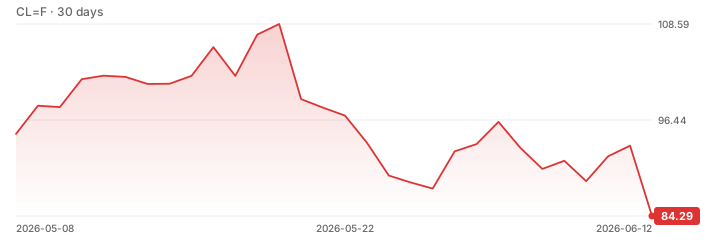
The move, directed by President Luiz Inácio Lula da Silva, aims to signal a return to fiscal discipline as global energy markets stabilize and crude oil benchmarks decline from their wartime peaks.
The decision marks a significant shift in Brazil’s energy policy, transitioning from price controls designed to shield consumers from geopolitical shocks to a market-driven pricing mechanism.
By dismantling these subsidies, the government seeks to reduce fiscal pressure and align domestic fuel prices with international trends, which have softened considerably in recent months.
This development places Brazil in line with other major economies adjusting their energy policies in response to lower global oil prices.
Nigeria recently instructed fuel marketers to reduce pump prices for Premium Motor Spirit to reflect falling crude benchmarks, while Mexico has scaled back fiscal subsidies for gasoline and diesel following an 8% drop in international oil prices.