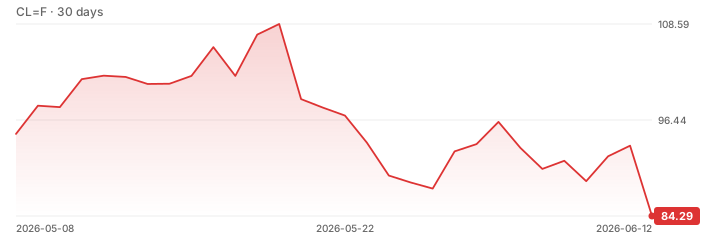
German Foreign Minister Johann Wadephul has firmly rejected any proposal to impose a toll on vessels transiting the Strait of Hormuz, insisting the waterway must remain open and free of such charges.
His comments mark a clear stance from Europe’s largest economy against monetizing the critical shipping lane, which handles a significant share of global crude oil exports.
The Strait of Hormuz remains a focal point of geopolitical risk, with recent reports indicating that over 8 million barrels of crude have exited the region as shipping activity resumes.
The intervention aligns Berlin with Beijing, as U.S. President Donald Trump recently noted that Chinese leader Xi Jinping also opposes the imposition of a toll at the strait.
This convergence of major powers suggests a coordinated diplomatic effort to prevent the chokepoint from becoming a source of revenue extraction that could destabilize trade flows.
The Strait of Hormuz remains a focal point of geopolitical risk, with recent reports indicating that over 8 million barrels of crude have exited the region as shipping activity resumes.
However, the prospect of transit fees introduces a new layer of uncertainty for energy markets and logistics planners.