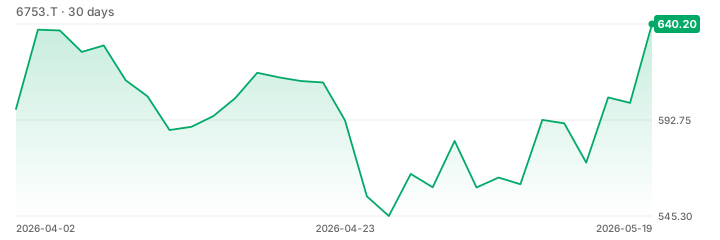
Investors are increasingly betting on a prolonged disruption to global shipping through the Strait of Hormuz, with prediction markets pricing the probability of normal operations resuming before the end of 2026 at just 34%.
The sharp decline in the likelihood of a swift return to status quo reflects deepening anxiety over the stability of the critical energy chokepoint amid escalating regional tensions.
The shift in signals a move from speculative concern to active hedging against structural trade route disruption.
Traders are no longer treating the Strait of Hormuz as a temporary friction point but are pricing in a scenario where normal commercial traffic remains suspended for months, fundamentally altering energy flow expectations for the remainder of the year.
This growing pessimism is compounded by parallel diplomatic and infrastructure developments.
The United States is actively seeking support from China and South Korea to stabilize the Gulf region, while Iraq and the United Arab Emirates are accelerating pipeline projects designed to bypass the Strait entirely as exports face potential drying up.