Iran's foreign minister has issued a stern warning to international shipping operators, stating that any attempt to bypass the country's preferred route through the Strait of Hormuz would "increase tensions" in the Middle East.
The statement, delivered on Sunday, comes as US and Iranian forces continue to exchange attacks in the region, underscoring the volatile security environment surrounding one of the world's most critical energy chokepoints.
The diplomatic intervention follows recent threats from Iran's Islamic Revolutionary Guard Corps (IRGC), which previously declared that unauthorized vessels crossing the strait "will be dealt with." This dual-track messaging—combining military posturing with diplomatic warnings—signals Tehran's intent to enforce strict control over transit patterns, potentially complicating navigation for commercial fleets seeking to mitigate risk.
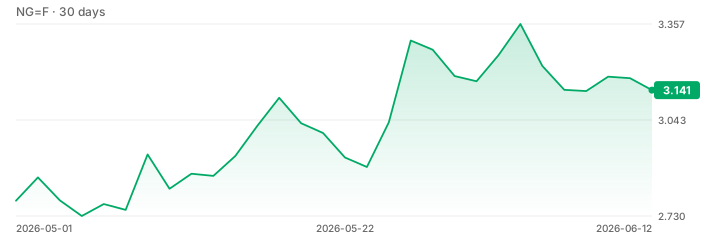
For global markets, the development reinforces the persistent shipping risk premium embedded in energy prices.
The Strait of Hormuz remains a focal point for global trade, with a significant portion of the world's oil and liquefied natural gas passing through its narrow waters.
Any disruption or forced rerouting could lead to immediate spikes in freight rates and energy costs, as seen in previous episodes of heightened tension.