The global semiconductor landscape is undergoing a structural shift as Chinese domestic chip designers rapidly narrow the technological gap with United States counterparts.
While Beijing continues to face significant hurdles in advanced manufacturing capabilities, the progress in chip design is transforming artificial intelligence hardware from a mere technical challenge into a tangible competitive advantage for Chinese firms.
This development marks a pivotal moment in the ongoing tech rivalry, suggesting that the US lead in AI infrastructure may be more fragile than previously assumed.
Market participants are closely monitoring this evolution, as it directly impacts the valuation and strategic positioning of major semiconductor players.
The ability of Chinese designers to produce competitive AI chips, even if reliant on older manufacturing nodes or alternative supply chains, threatens to fragment the global market.
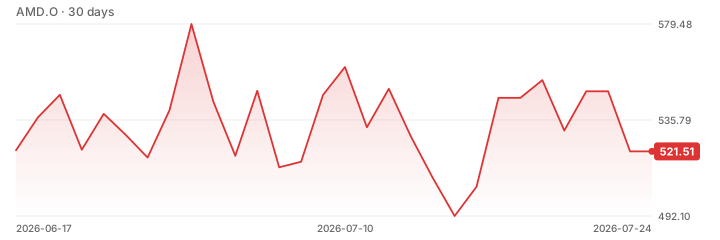
Investors in US-based giants like Nvidia and AMD must now account for a more sophisticated and resilient competitor in the East, potentially dampening the growth trajectory of the AI memory and compute sectors.