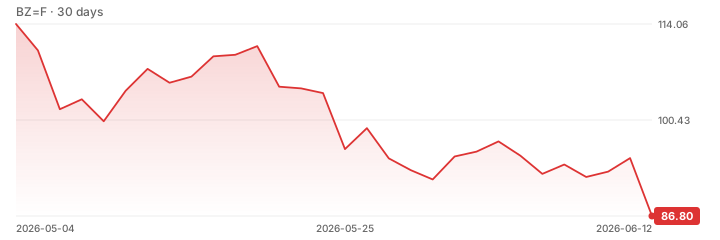
Brazil’s Ministry of Planning and Budget has quantified the monthly cost of its fuel price stabilization program, revealing a significant fiscal burden that continues to weigh on the state-controlled oil sector.
Minister Bruno Moretti stated on Friday that the subsidies required to smooth domestic fuel prices amount to approximately R$1.3 billion per month for gasoline and R$5.5 billion for diesel, totaling R$6.8 billion monthly.
This disclosure underscores the scale of the financial support being provided to consumers and the operational constraints placed on national energy infrastructure.
The figures represent a substantial outflow that directly impacts the bottom line of Petrobras, which is the primary vehicle for implementing these price controls.
The state-owned giant has been absorbing the difference between international crude prices and regulated domestic retail rates, a practice that has eroded its profitability and free cash flow generation.
With diesel subsidies alone consuming more than four times the amount allocated to gasoline, the imbalance reflects the government’s prioritization of transport and logistics costs over personal vehicle fuel expenses.