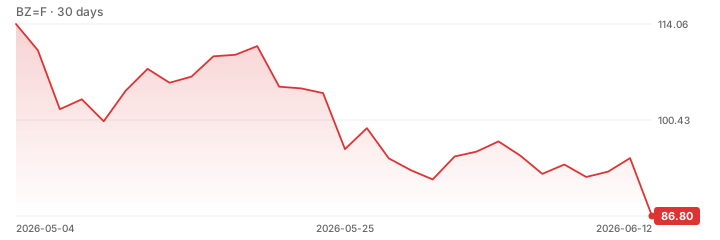
Brent crude prices remained steady in early trading as political scrutiny of energy pricing intensified in Europe.
The Portuguese Socialist Party (PS) has escalated its criticism of the government’s energy policy, demanding immediate explanations for the disconnect between international crude oil movements and domestic fuel prices.
This political friction adds a layer of regulatory risk to the energy sector, even as global benchmarks show no immediate supply-driven volatility.
The opposition’s demands highlight a growing tension between global commodity trends and local consumer costs.
While Brent crude has been trading within a narrow range, domestic fuel prices in several European markets have not mirrored these movements, leading to public dissatisfaction.
The PS’s intervention signals that energy pricing is becoming a more prominent political issue, potentially influencing future policy decisions on subsidies or taxes.