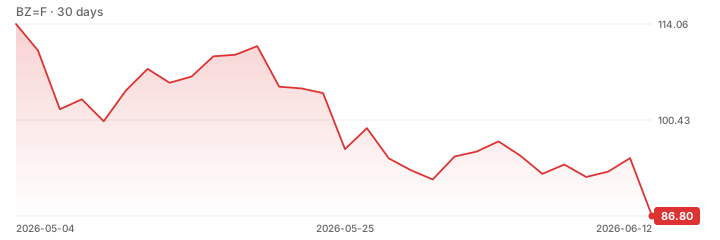
Brent crude futures climbed more than 1.5% in Asian trading on Thursday, reaching their highest level in over six weeks as geopolitical risks to global energy supplies intensified.
The rally was driven by reports that Yemen’s Houthi rebels have resumed targeting oil tankers in the Red Sea, raising immediate concerns about the security of critical shipping lanes.
The sharp move marks a significant reversal from the previous week, when oil prices had slid below $71 as traders digested progress in US-Iran talks and eased fears of a Strait of Hormuz closure.
The sharp move marks a significant reversal from the previous week, when oil prices had slid below $71 as traders digested progress in US-Iran talks and eased fears of a Strait of Hormuz closure. The renewed aggression by the Houthis, reportedly acting on instructions from Iran, has forced markets to rapidly repricing the risk premium associated with Middle Eastern transit routes.
This development underscores the fragility of the recent de-escalation and highlights how quickly sentiment can shift when physical threats to infrastructure re-emerge.
The escalation comes amid a broader backdrop of heightened military exchanges between the US and Iran across the Gulf.
The breakdown of the recent truce has raised the stakes for global energy flows, with traders now weighing the probability of a wider conflict that could spill over into other critical chokepoints.
The market’s reaction suggests that investors are prioritizing immediate supply disruption risks over longer-term diplomatic signals.