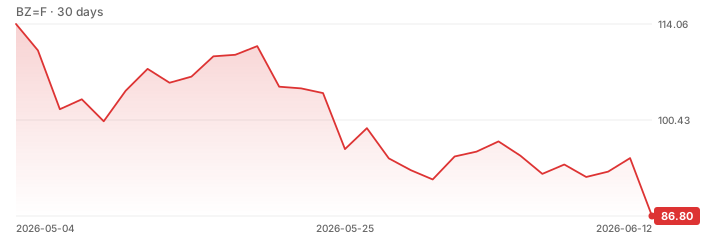
Brent crude futures surged more than 2.5% in Wednesday trading as markets reacted to a fresh escalation in Middle East supply risks.
The sharp move higher reflects growing investor anxiety over the potential for a prolonged conflict between the United States and Iran, which could disrupt critical oil export routes through the Strait of Hormuz.
European fuel prices have already risen as price caps expired, while Brent crude had previously stabilized around $72 before this latest volatility.
The price spike comes amid a backdrop of intensifying diplomatic rhetoric and renewed military hostilities in the region.
Traders are increasingly pricing in the scenario where shipping lanes face sustained exposure, a risk that has been building since earlier reports of Iranian threats against tankers deviating from established routes. The market’s reaction underscores the sensitivity of energy prices to geopolitical instability, with government bonds also facing selling pressure as risk sentiment cooled.
This development adds to a series of recent shocks in the energy complex.
European fuel prices have already risen as price caps expired, while Brent crude had previously stabilized around $72 before this latest volatility. The current move suggests that the floor for crude prices may be higher than previously anticipated, driven by the persistent threat of supply chain interruptions rather than fundamental demand shifts.