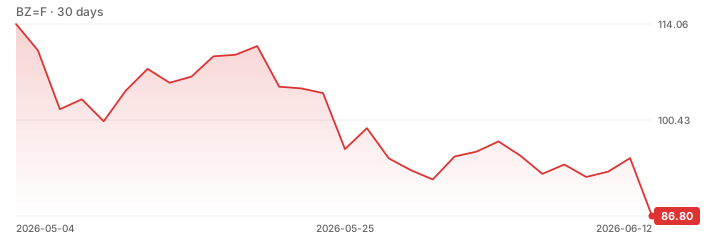
Brent crude prices advanced in the session as renewed military activity in the Middle East reignited supply-side concerns.
The escalation, which includes fresh US strikes on targets in Iran, has forced traders to reassess the risk of physical disruption to global energy flows.
This geopolitical premium is now the primary driver of price action, overriding recent inventory data that had previously suggested a waning risk appetite.
Despite the upward pressure on energy costs, broader market sentiment remains anchored by improving inflation dynamics in the United States.
Recent US data prints have shown a clear deceleration in price pressures, reducing the likelihood of a hawkish pivot from the Federal Reserve.
This divergence creates a complex trading environment: while oil moves higher on geopolitical fear, equity and bond markets are pricing in a more accommodative monetary policy stance, assuming the conflict does not spiral into a broader regional war that would reignite stagflationary risks.