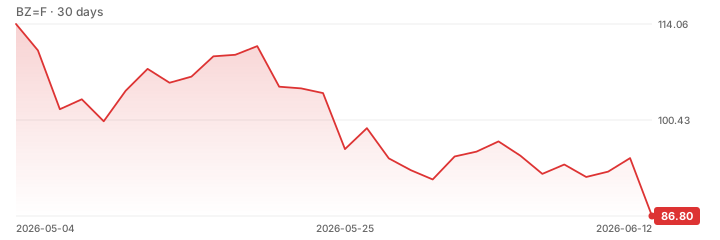
Brent crude futures declined in early Sunday trading, extending losses from the two-month peak reached last week.
The sell-off accelerated after the United States and Iran both refrained from launching military strikes in the Persian Gulf, signaling a de-escalation of tensions that had previously driven a significant risk premium into energy markets.
The restraint from both sides has allowed traders to unwind positions built on the expectation of imminent supply disruptions.
This development follows a broader retreat in global oil prices that began on Monday, as markets digested reports of progress in peace negotiations between Washington and Tehran. The preliminary diplomatic breakthrough significantly reduced the perceived risk of supply interruptions in the Strait of Hormuz, a critical chokepoint for global oil flows.
The shift in geopolitical posture has sparked relief across energy markets, with participants pricing in a lower probability of physical conflict.
The absence of military action in the Gulf has effectively removed the immediate tailwind that had supported higher oil prices, leading to a reassessment of near-term supply risks.
Traders are now focused on whether this pause will solidify into a lasting diplomatic resolution.